Floods are not a side story in Kaziranga National Park. They are the main force that shapes the forest, the grasslands, and the way animals move through the landscape. Every year, the Brahmaputra River overflows, and wildlife responds in ways shaped by nature over centuries.
Understanding this cycle helps visitors see Kaziranga as a living ecosystem rather than just a safari destination.
Annual Floods as a Natural Process
Kaziranga lies in the active floodplain of the Brahmaputra. During the monsoon, heavy rainfall causes the river and its tributaries to spread across large parts of the park, transforming low-lying grasslands into temporary wetlands.
These floods renew grasslands by clearing old and dry vegetation, refill wetlands and beels that serve as critical water sources through drier months, and deposit nutrient-rich silt that supports the vegetation wildlife depends on. Rather than damaging the forest, flooding keeps the habitat healthy and productive year after year.
This natural renewal process is one of the key reasons Kaziranga holds global conservation importance. Without it, the grasslands would degrade and the park would lose much of what makes it capable of supporting such high wildlife density.
Why Animals Move During Floods
As water levels rise, low-lying grasslands and forest areas go underwater. Wildlife responds instinctively by moving toward higher ground known as chaporis and nearby hill forests outside the core park area.
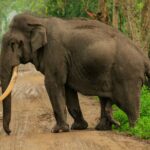
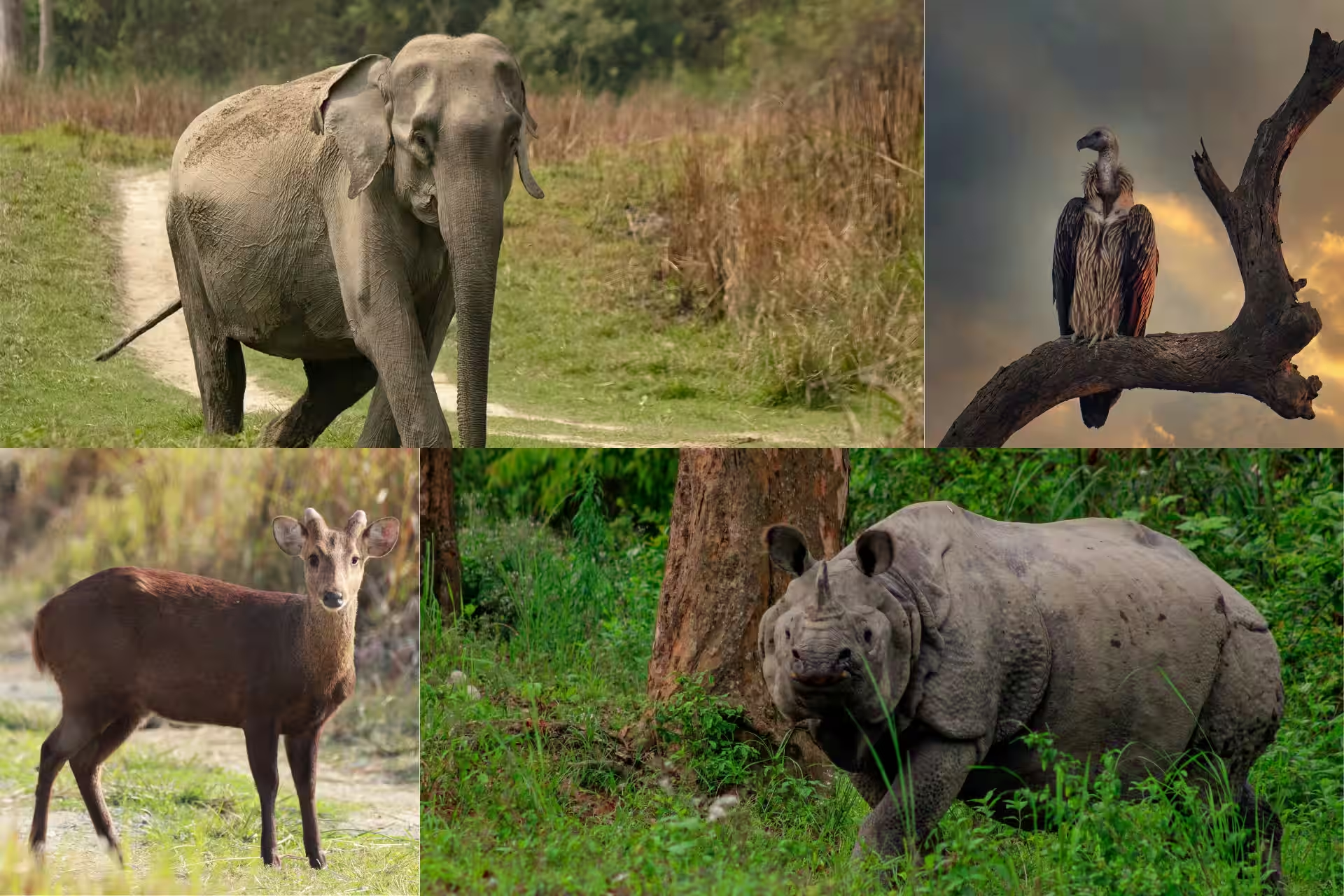
This movement is not random. Animals follow traditional routes used for generations, passed down through learned behavior and instinct. Rhinos, deer, elephants, and even predators temporarily shift their ranges to survive the high-water period, and they return to their usual territories once the floods recede.
Rhino Movement and Flood Survival
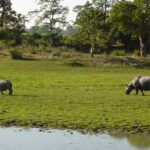
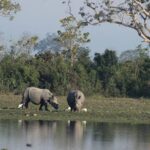
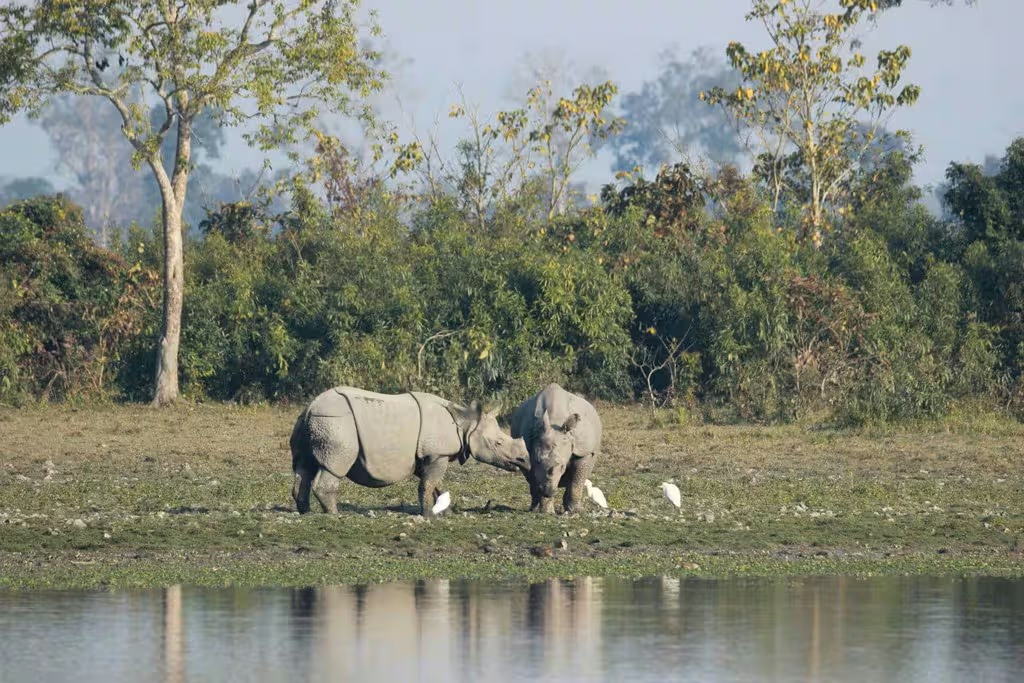
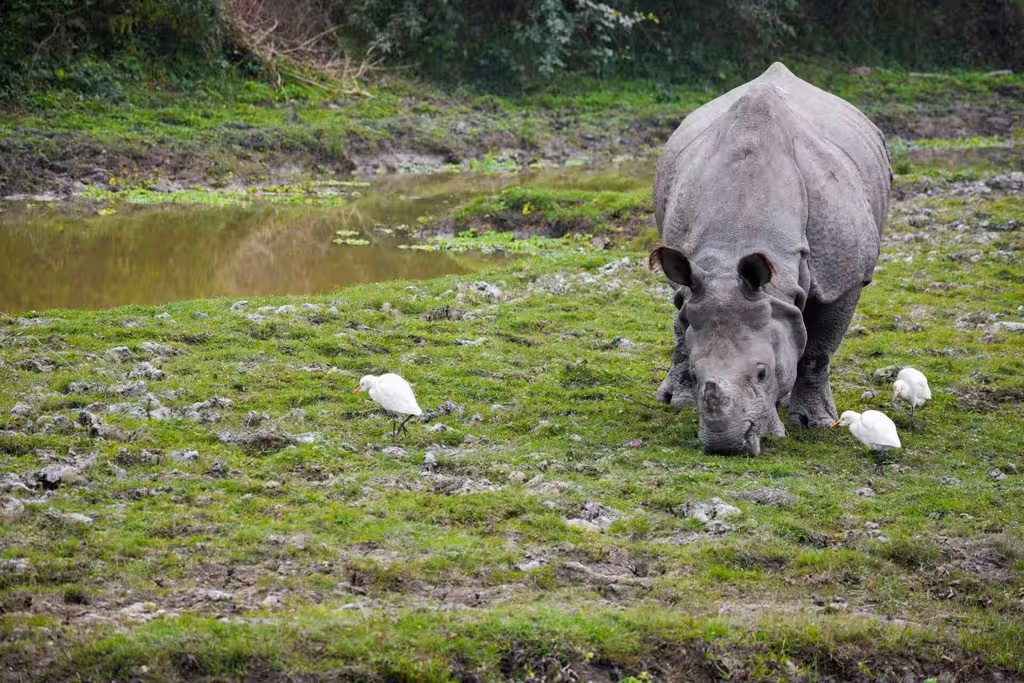
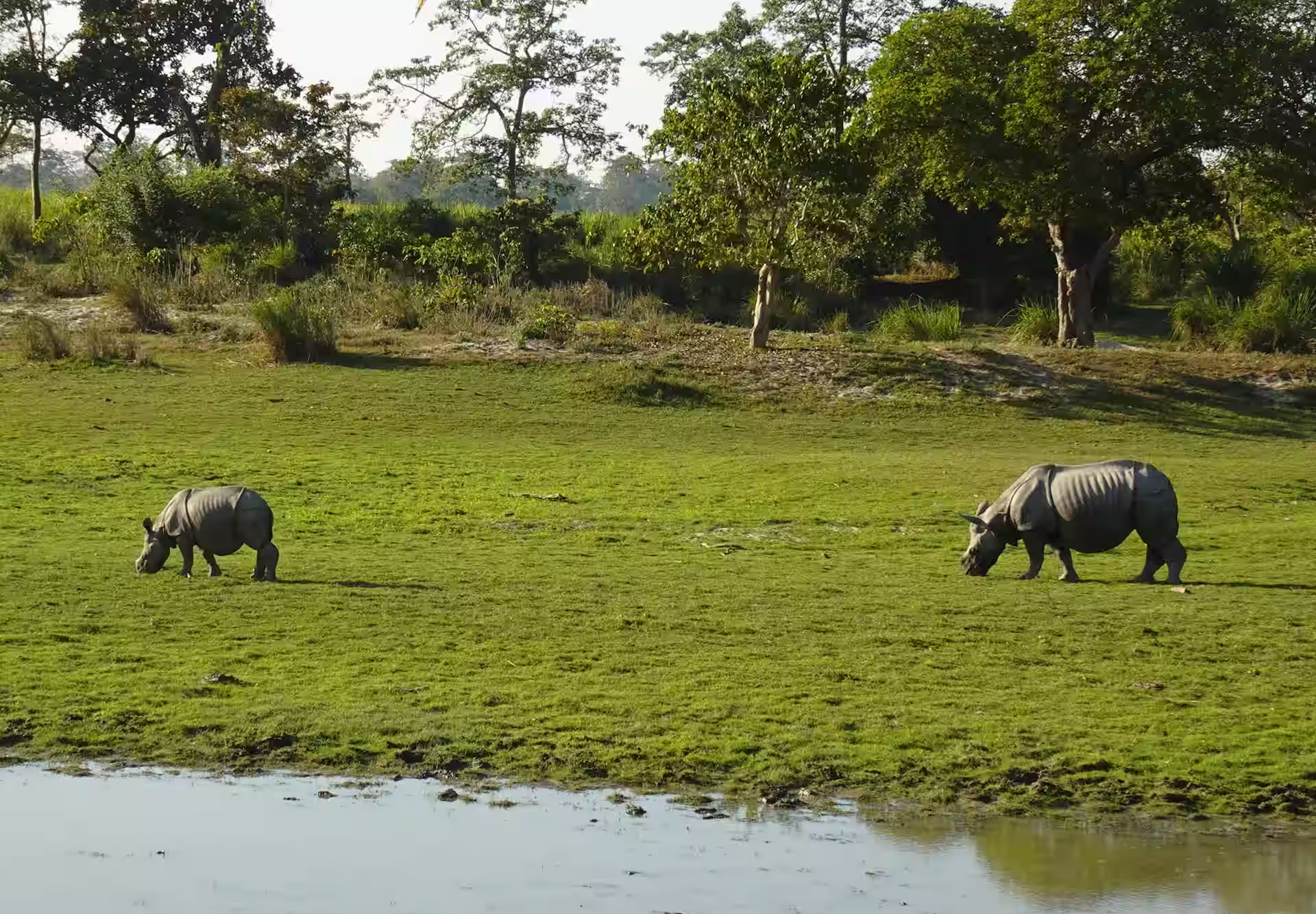
One-horned rhinoceroses are strong swimmers, but prolonged flooding forces them to seek higher ground where they can graze and rest without constant exposure to deep water. Calves are especially vulnerable during this time and may struggle to keep up with adults during long movements through flooded terrain.
Rhinos move toward elevated patches within the park or cross into nearby forest areas that sit above the floodwater line. Forest staff closely monitor these movements during the monsoon to reduce risk and prevent animals from straying into unsafe zones or coming into conflict with human settlements on the park boundary.
Floodwaters also deposit nutrient-rich silt across the grasslands, which supports the tall grasses rhinos depend on once waters recede and vegetation begins growing again.
Deer, Buffalo, and Grassland Species
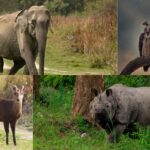
Grassland animals - spotted deer, swamp deer, hog deer, and wild water buffalo - are among the first to relocate as water rises. They gather in higher zones, sometimes in large numbers that create temporary concentrations not seen during drier months.
While this concentration increases exposure to predators, it is a natural and temporary phase of the flood cycle. After floods retreat, these animals spread back into newly refreshed grazing areas where fresh vegetation has begun to emerge. The post-flood grasslands support higher prey density, which in turn sustains the predator population through the following months.
Predators Follow the Movement
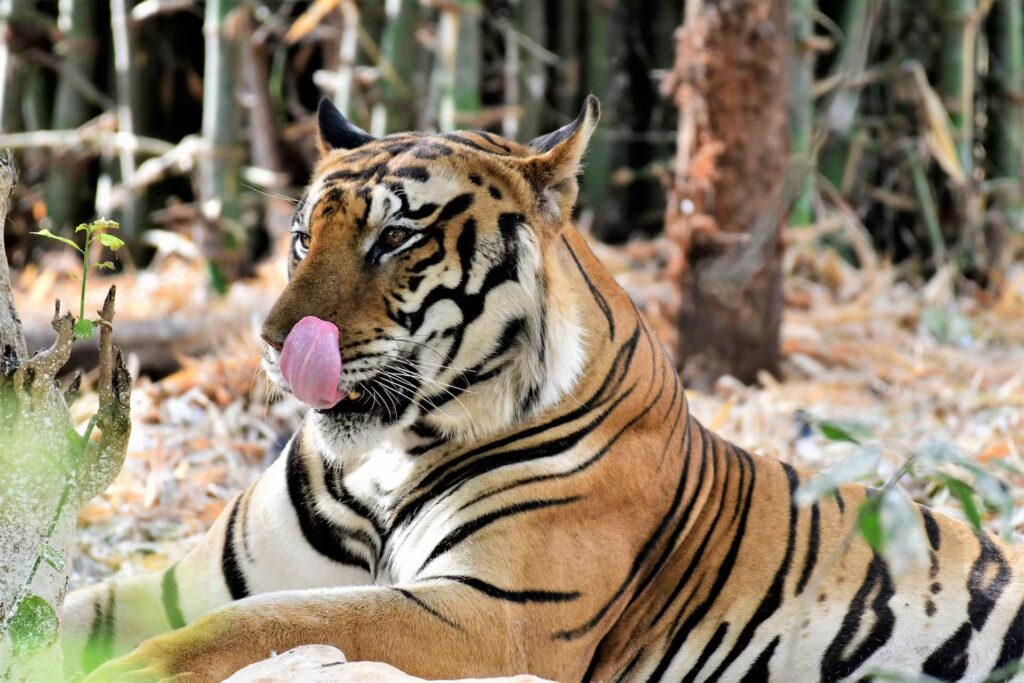
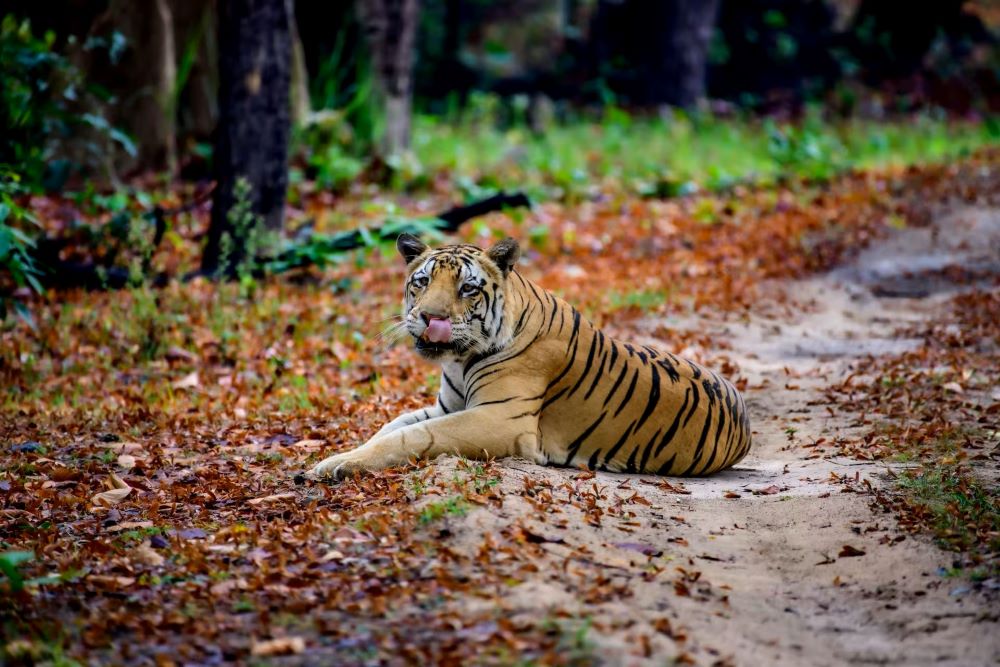
Predators adjust quickly to flood-driven changes. Tigers and leopards track prey movement rather than holding fixed territories during this period. The concentration of prey animals in elevated areas creates temporary hunting opportunities that predators exploit.
In Kaziranga, tigers often use elevated grassland edges and forest patches during monsoon months, moving between these areas as prey shifts location. Floods do not reduce predator presence or activity. They simply reshape hunting patterns and movement routes in ways that follow the availability of prey.
Role of Wildlife Corridors
Flood-driven movement makes wildlife corridors critical for survival. Kaziranga connects to nearby hill forests such as Karbi Anglong through designated corridors that allow safe passage between flooded plains and higher ground.
These routes are essential for elephants, deer, and other animals that need to move beyond the park boundaries when water levels peak. Any obstruction along these paths - whether from human encroachment, roads, or development - increases risk during peak floods and can trap animals in areas where survival becomes difficult.
Corridor protection is a major conservation focus precisely because the annual flood cycle depends on these pathways remaining open and functional. Without them, wildlife has nowhere to go when water covers their usual habitat.
Floods and Road Crossings
One of the biggest challenges during floods is wildlife crossing highways near the park boundary. As animals move toward higher ground, roads often cut directly across their natural migration paths, creating dangerous bottlenecks where vehicle strikes become a serious threat.
Seasonal speed restrictions, night traffic controls, and elevated animal passages help reduce accidents during peak flood months. Forest teams remain active throughout the flood period to manage emergencies, guide animal movement away from high-traffic areas, and respond to incidents when they occur.
The challenge is ongoing. As traffic volumes increase and development continues near park boundaries, maintaining safe crossing points becomes more difficult each year.
Seasonal Closure of Core Zones
During peak monsoon months, Kaziranga's core safari zones remain closed due to flooding and safety concerns. This seasonal closure usually lasts from early May to late October, depending on rainfall patterns and river levels in any given year.
The closure serves multiple purposes. It allows wildlife to move freely without disturbance from safari vehicles, gives the forest time to recover naturally from the previous tourist season, and prevents visitors from entering areas where conditions are unsafe. Once water levels recede, the park reopens in phases as different zones dry out and become accessible again.
Animal movement patterns gradually stabilize after reopening as wildlife returns to familiar territories and spreads back across the grasslands and wetlands that define their usual range.
How Floods Benefit the Ecosystem
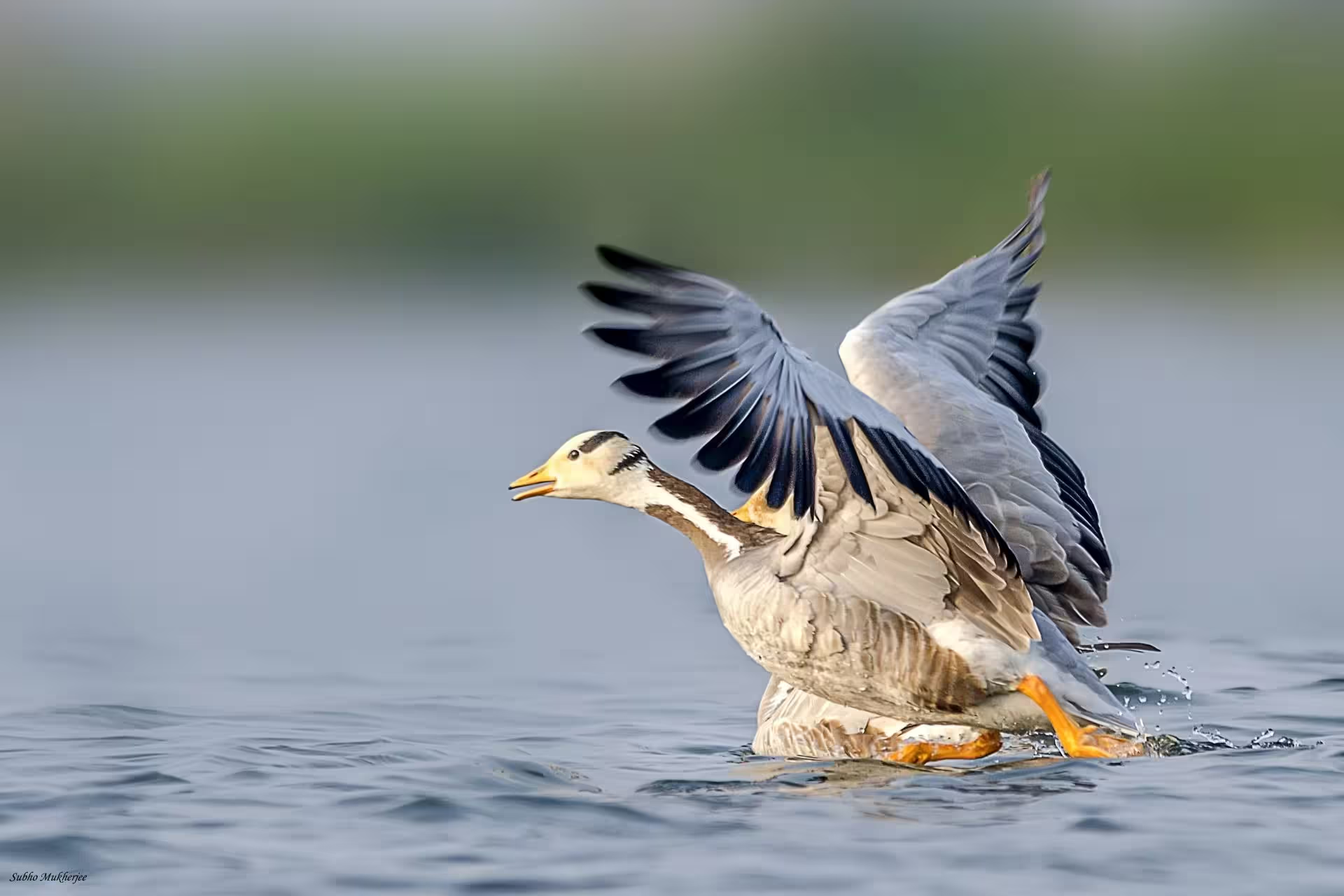
After the floods withdraw, Kaziranga transforms in visible ways. Fresh grass shoots emerge across the plains, taking advantage of the nutrient-rich silt deposited during the high-water period. Wetlands and beels attract large numbers of migratory and resident birds. Prey populations stabilize as grazing conditions improve.
This post-flood phase supports the high wildlife density and healthy predator-prey balance that Kaziranga is known for. Without annual floods, the grasslands would decline, wetlands would shrink, and many species would lose the habitat conditions they depend on.
The flooding is not an interruption to the ecosystem. It is the mechanism that keeps the ecosystem functioning.
What Visitors Should Know
Core zone safaris are suspended during the monsoon for safety and conservation reasons, and attempting to visit during this period is not possible. When the park reopens, visitors often notice lush greenery, increased animal activity across grasslands and wetlands, and a general vitality to the landscape that reflects the post-flood renewal.
Kaziranga is not a static forest. It changes with seasons, and this change is the reason wildlife continues to thrive here in numbers that few other protected areas in India can match.
Final Thoughts
Floods shape every aspect of wildlife movement in Kaziranga. They determine where animals go, how they survive, and how the ecosystem renews itself year after year.
Rather than viewing floods as a threat to the park, understanding them as a tool for ecological balance changes how you see Kaziranga. The annual rhythm of flood and renewal is what keeps the park alive, resilient, and globally significant as a conservation success story.
This is not a park that survives despite the floods. It is a park that exists because of them.
Plan your safari with us to experience this dynamic landscape in the most meaningful way.