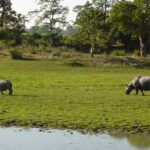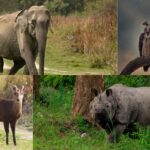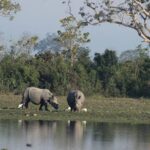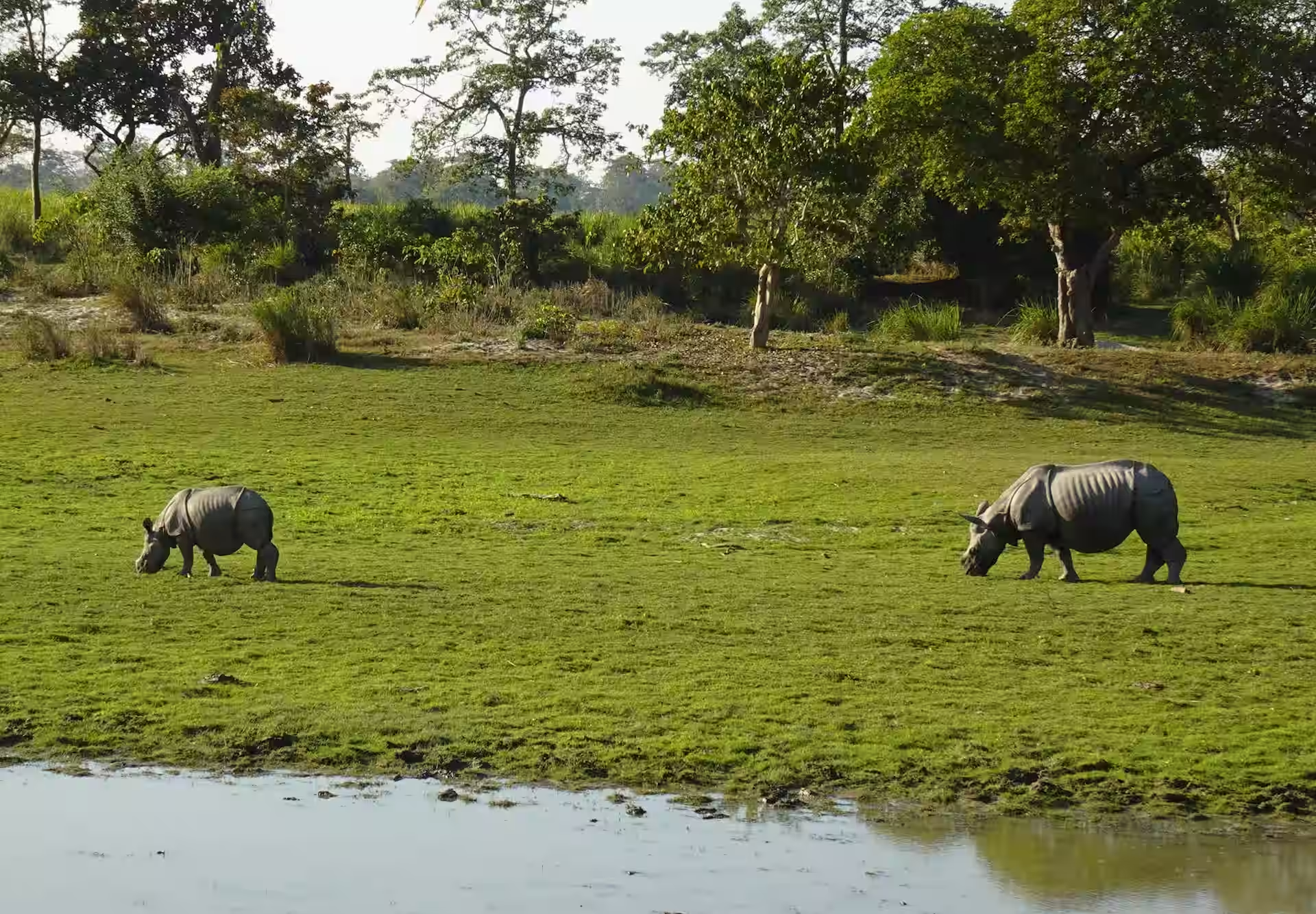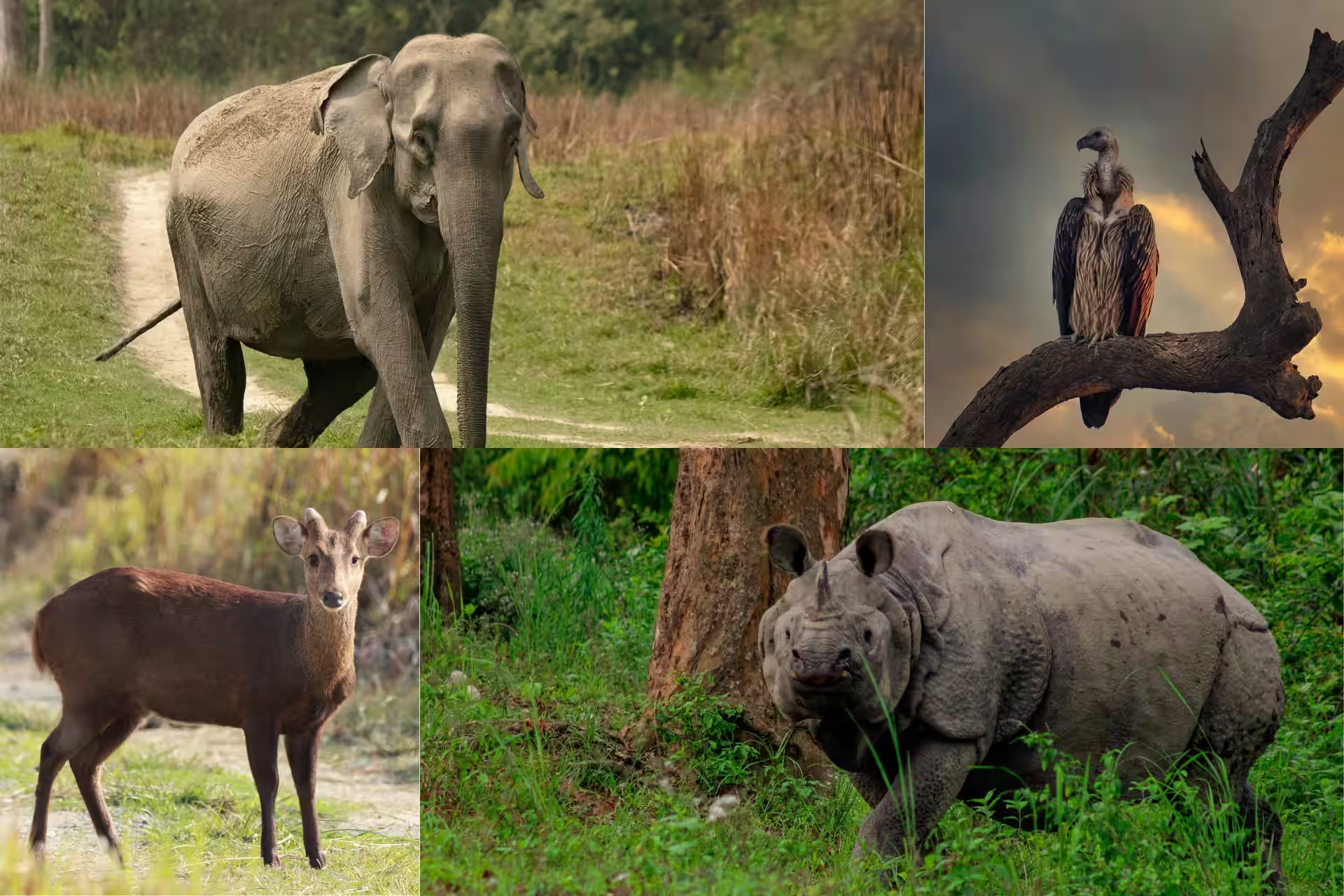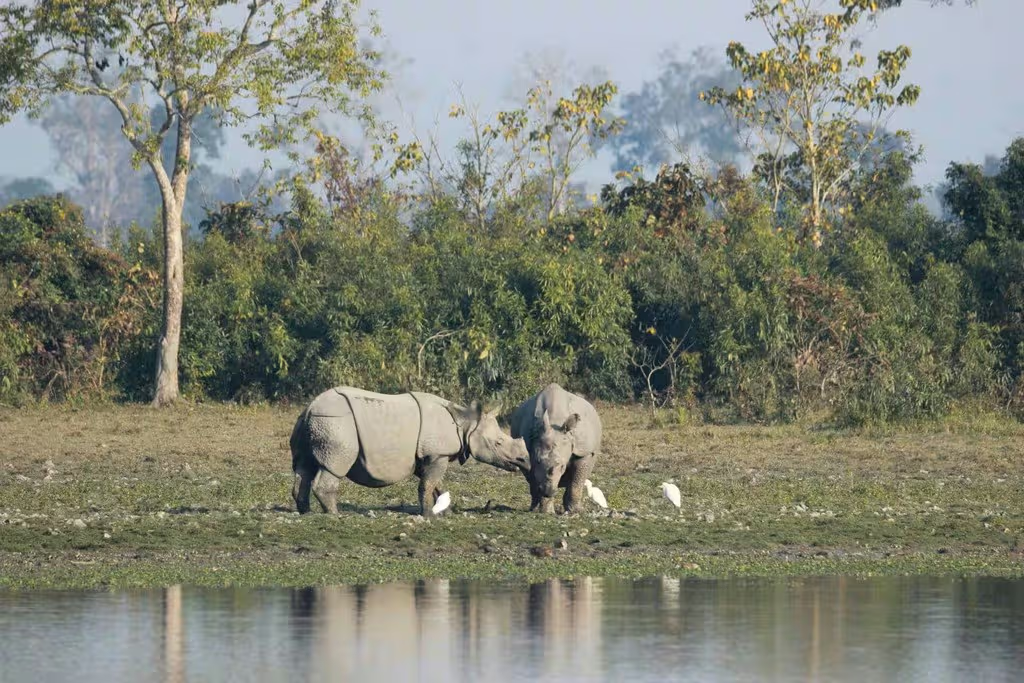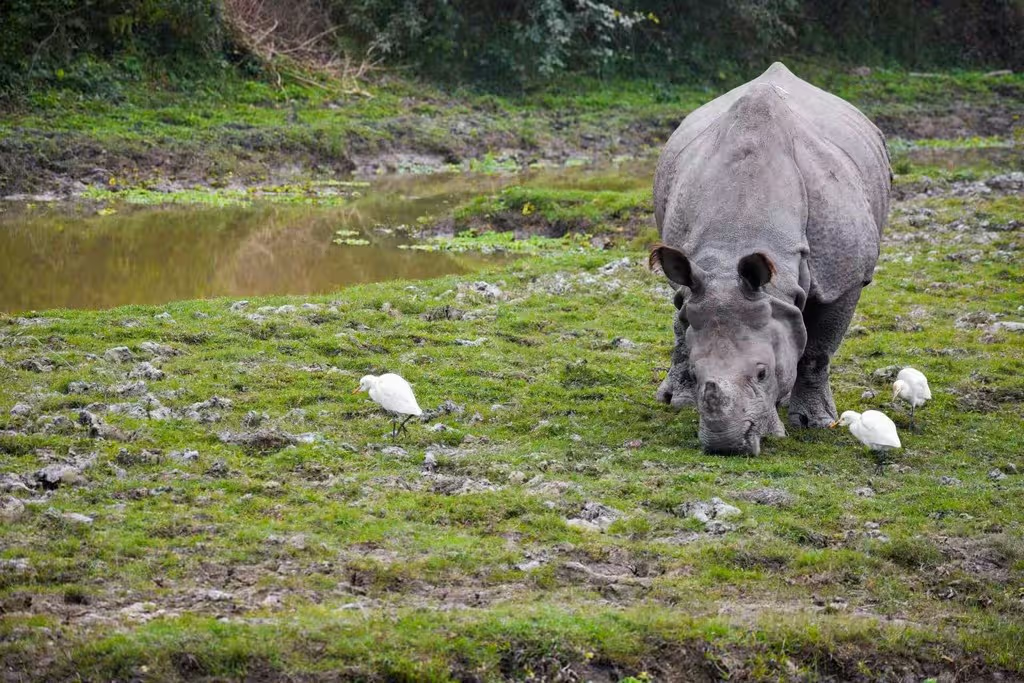
Kaziranga is known worldwide for the one-horned rhinoceros, but for birdwatchers, it is equally important.
The park sits in the floodplains of the Brahmaputra River. Vast grasslands, wetlands, marshes, and river channels create one of the richest bird habitats in India. Over 480 species have been recorded here.
Unlike central Indian forests, birding in Kaziranga means scanning open grasslands, beels, and tall elephant grass rather than dense woodland.
Here are ten birds that truly define Kaziranga.
Bengal Florican
One of the rarest grassland birds in the world.
Kaziranga is among the last strongholds of this critically endangered species. It prefers tall grassland patches. Males perform short display flights during the breeding season. Sightings are rare and special.
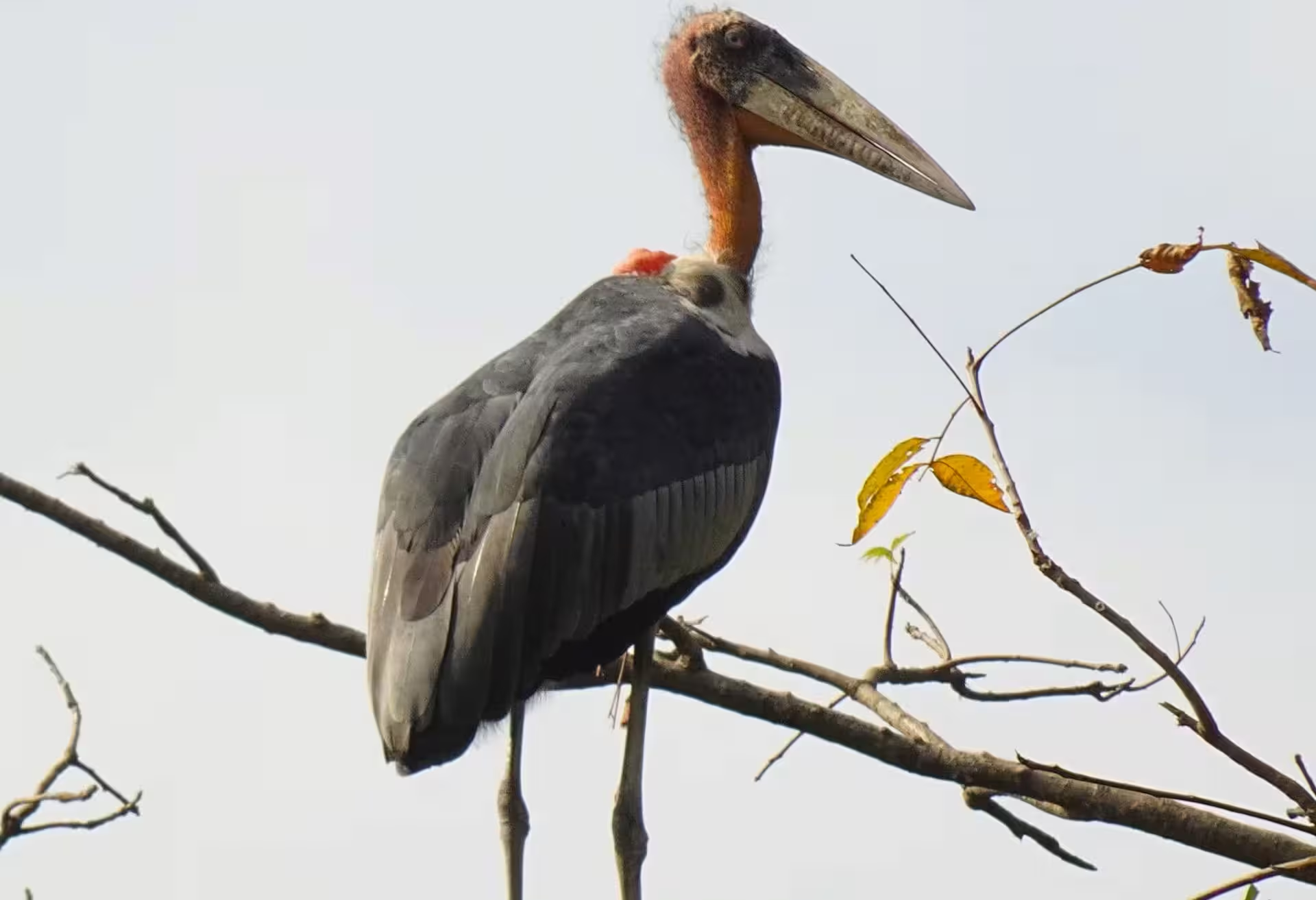
Greater Adjutant Stork
A large and striking wetland bird.
Often seen near marshes and shallow water areas. Its heavy bill and bare neck make it easy to identify. Kaziranga supports one of the key populations of this globally threatened species.
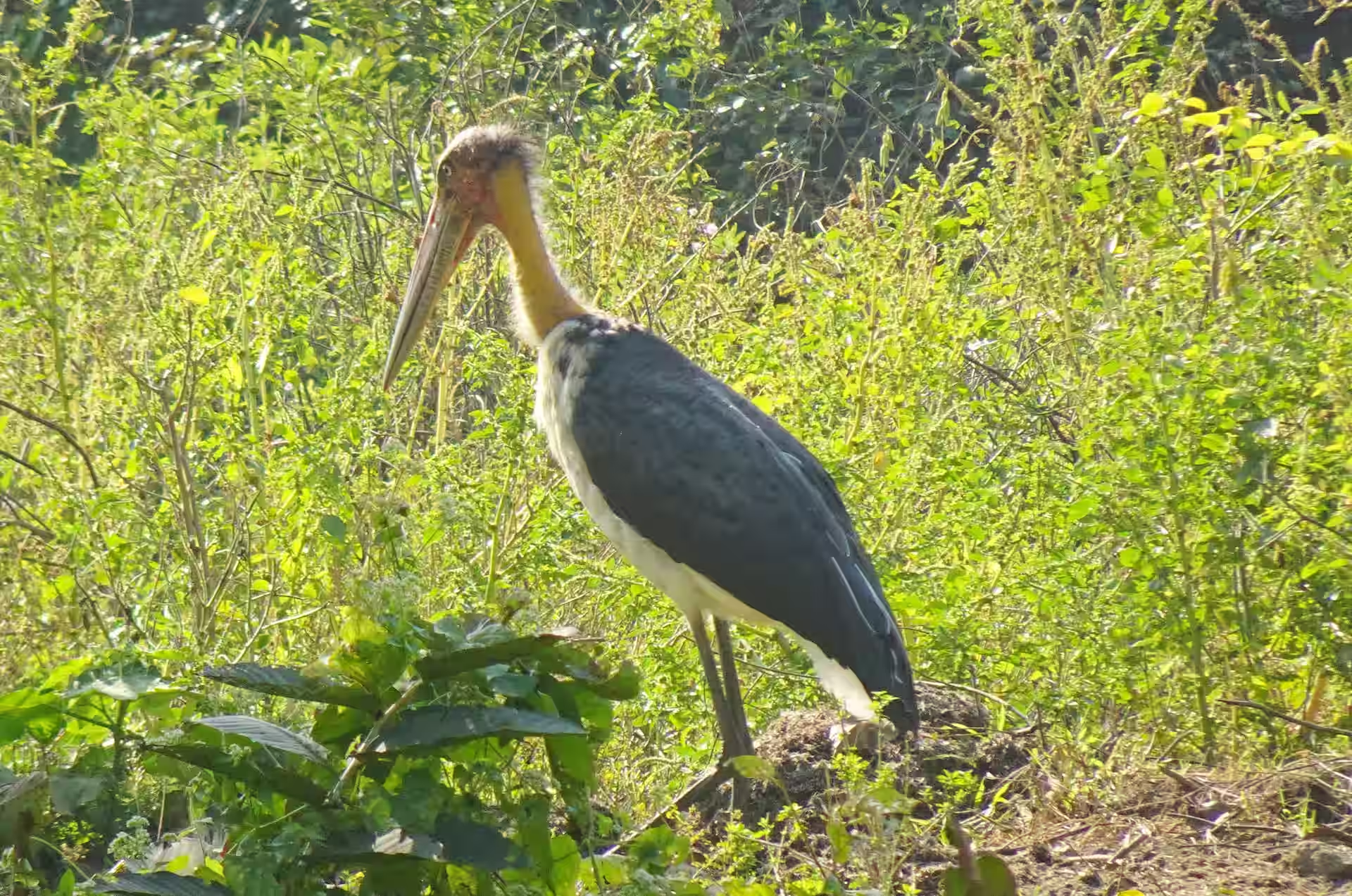
Lesser Adjutant Stork
Smaller than the greater adjutant but equally impressive.
Seen feeding in wetlands and grassland edges. Usually spotted alone or in small groups.
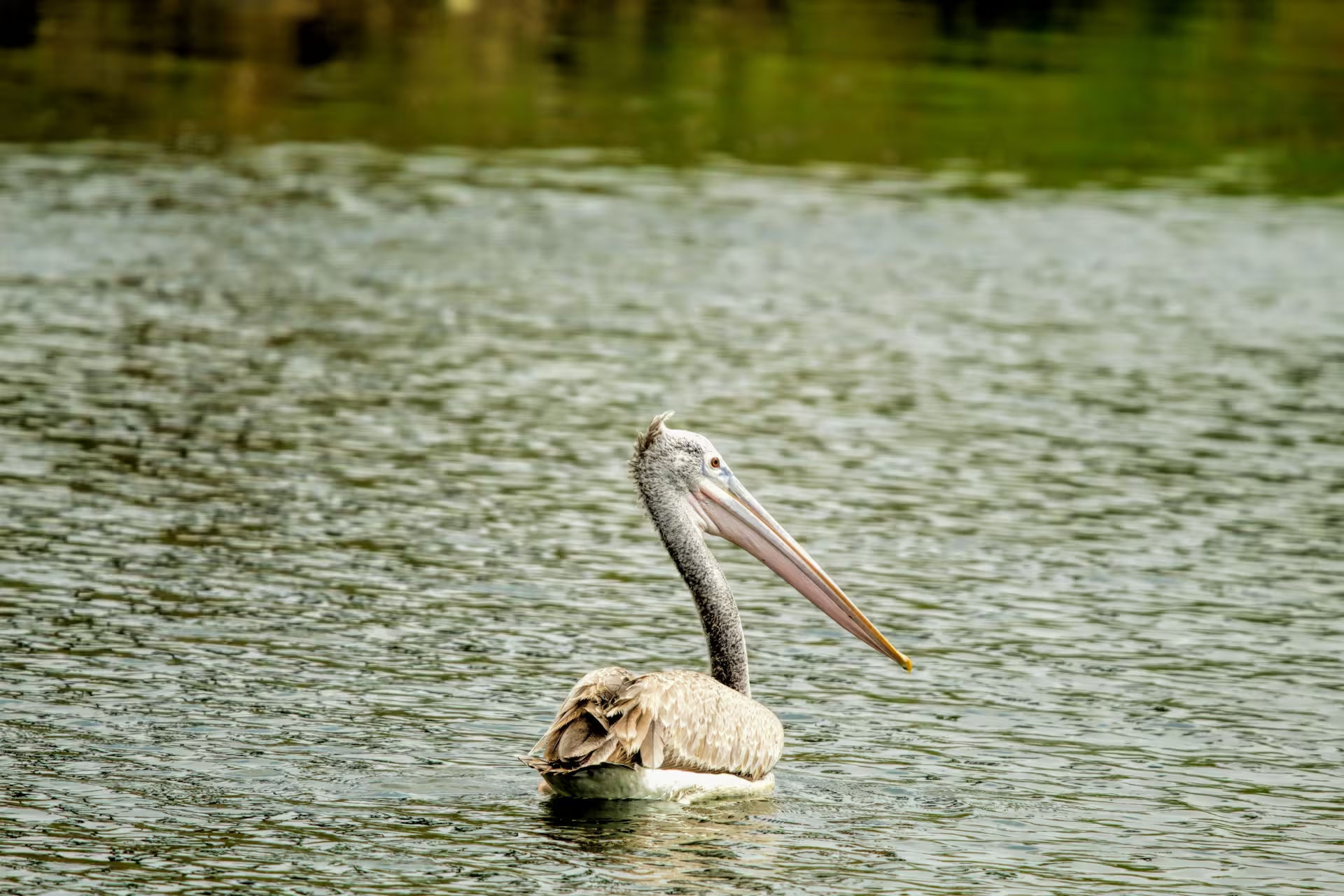
Spot-billed Pelican
A major wetland highlight.
These large birds are often seen resting on sandbanks or fishing in groups. They glide low over water bodies and are most visible in winter.
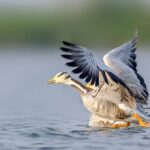
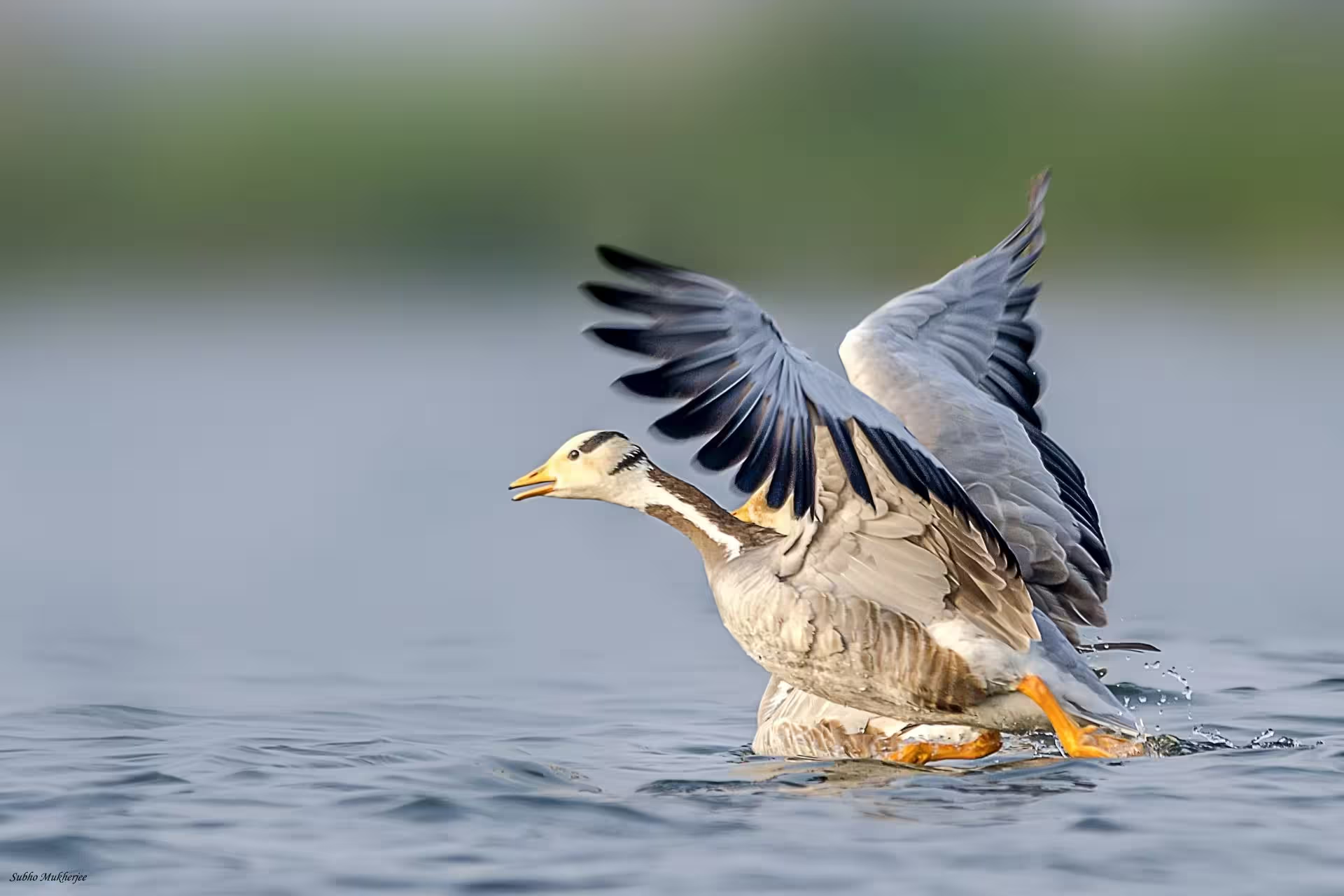
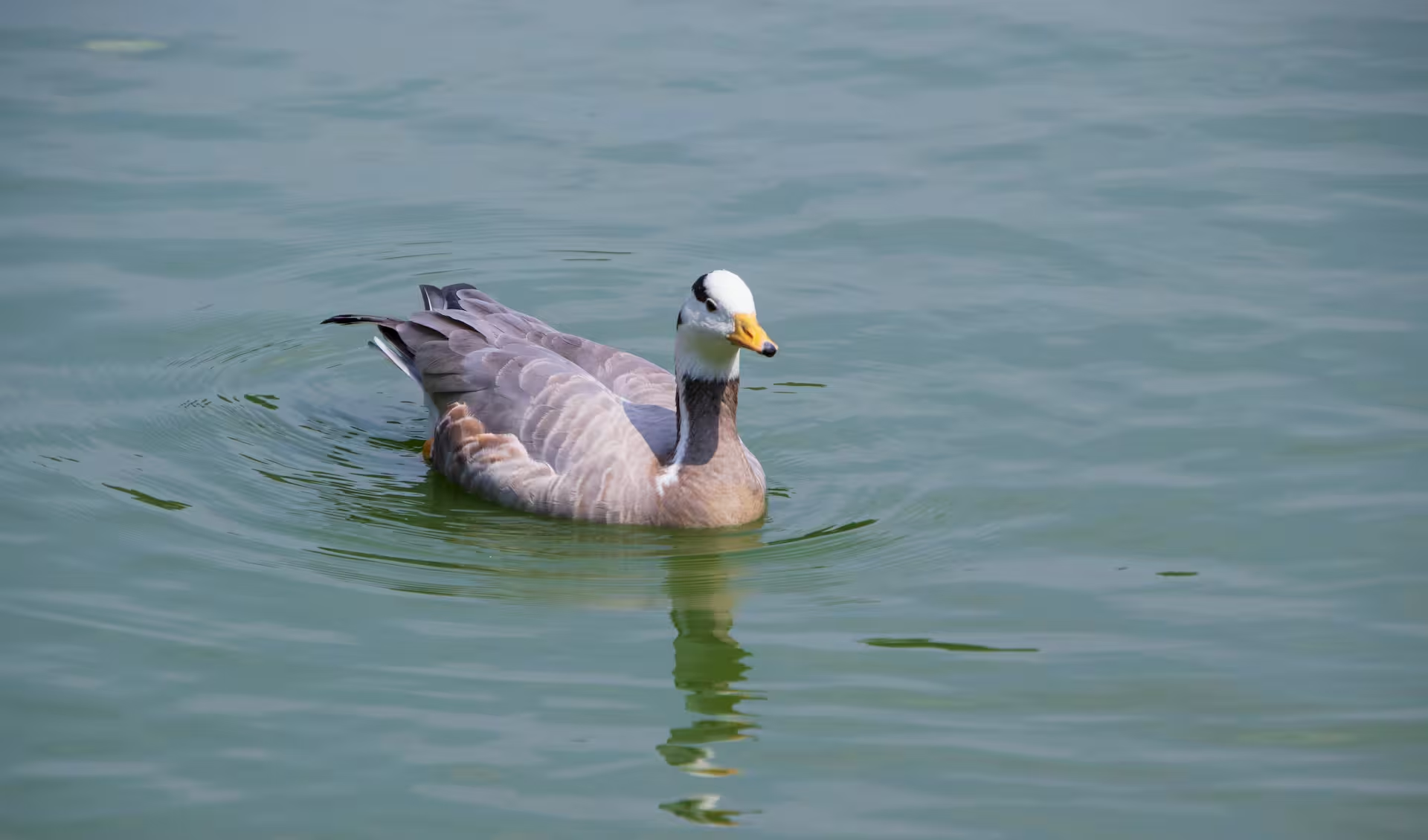
Bar-headed Goose (Winter Visitor)
Arrives during winter months.
Flocks gather in wetlands and open water areas. They are famous for flying across the Himalayas during migration.
Swamp Francolin
A true grassland species.
Often heard before seen. It prefers dense tall grass and usually appears briefly near track edges early in the morning.
Pallas’s Fish Eagle
Seen near rivers and large water bodies.
It perches on tall trees and hunts fish from above. Winter increases sighting chances.
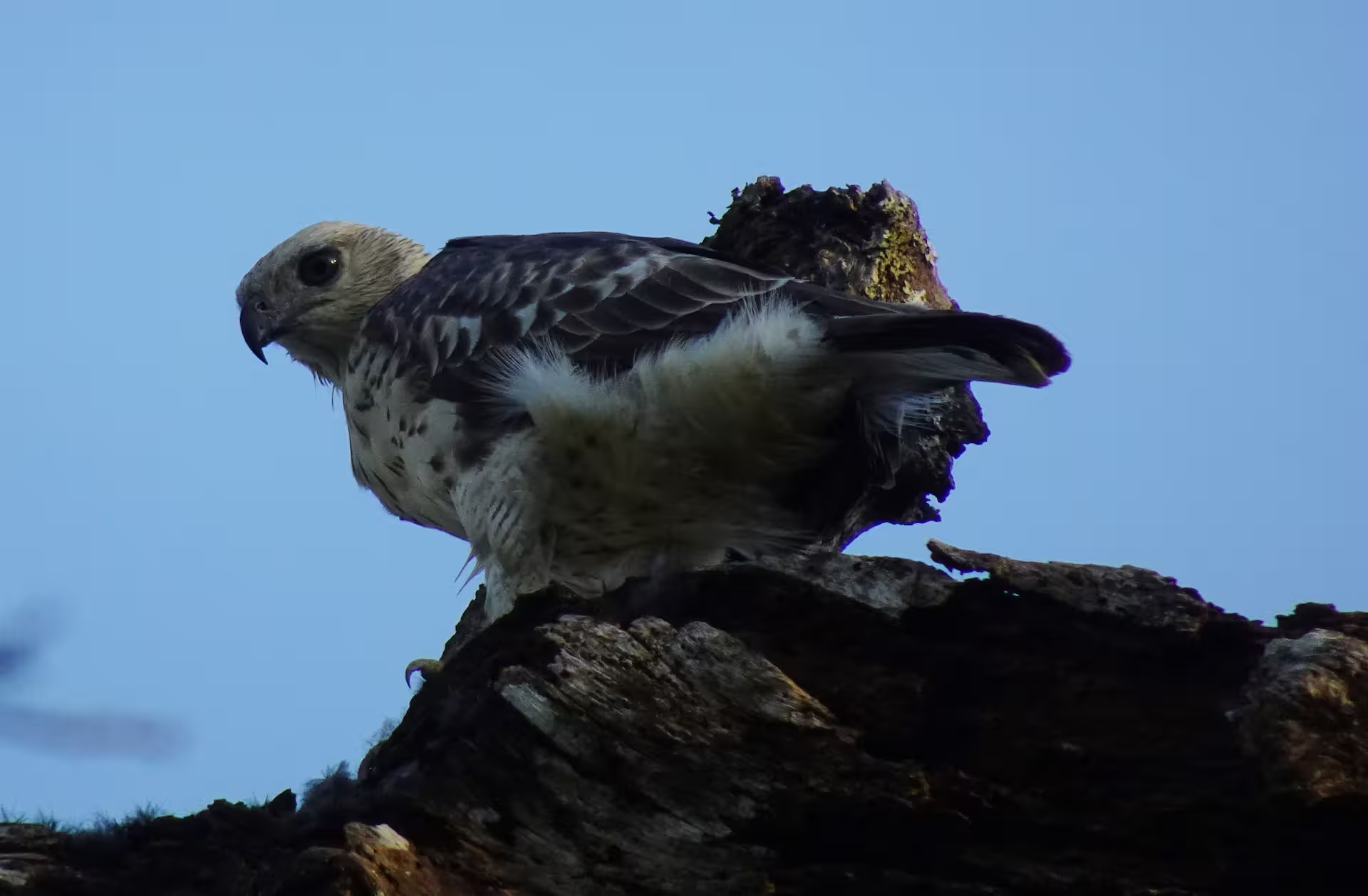
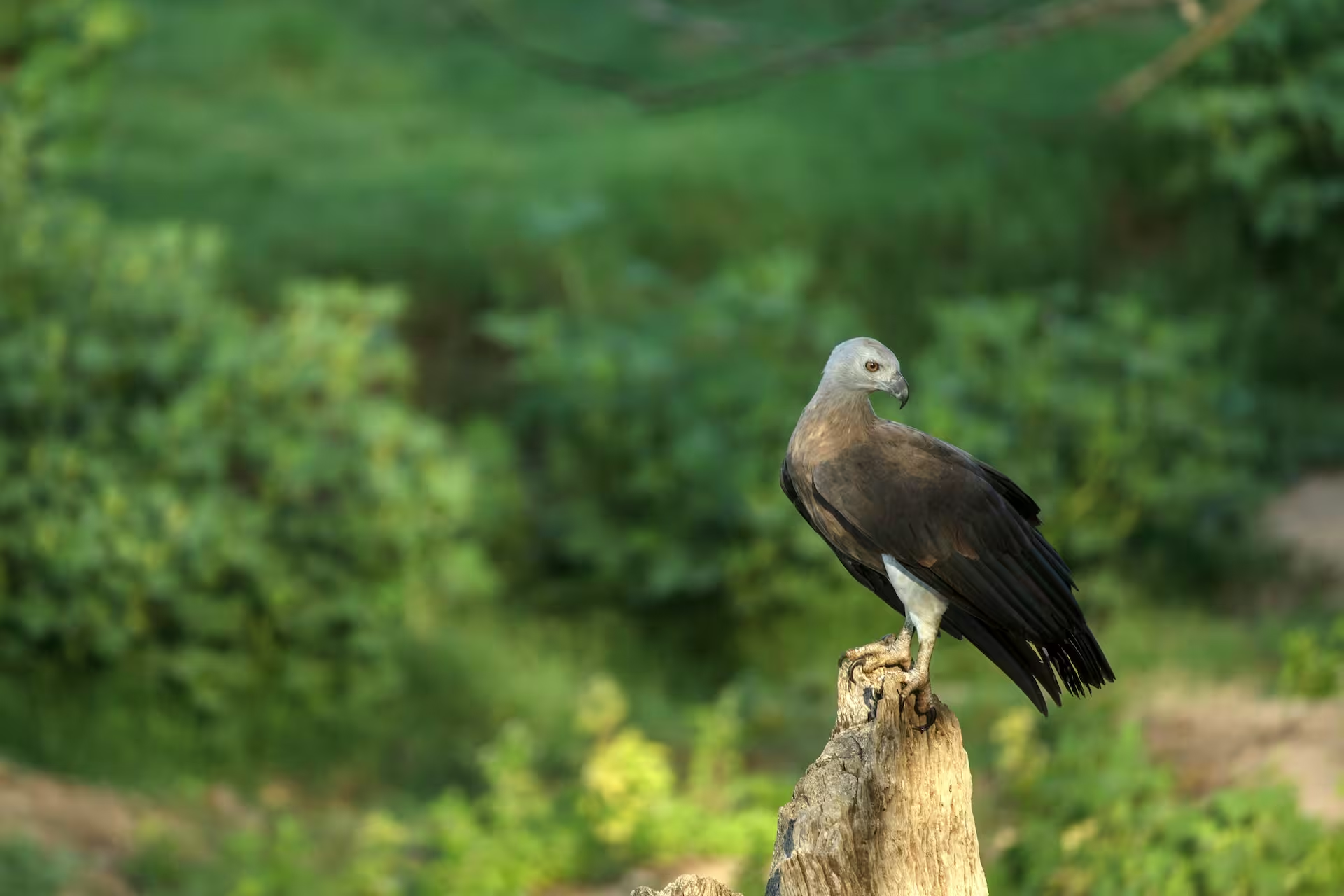
Grey-headed Fish Eagle
Common along wetland edges.
Smaller than the Pallas’s fish eagle, it often calls loudly while perched near water.
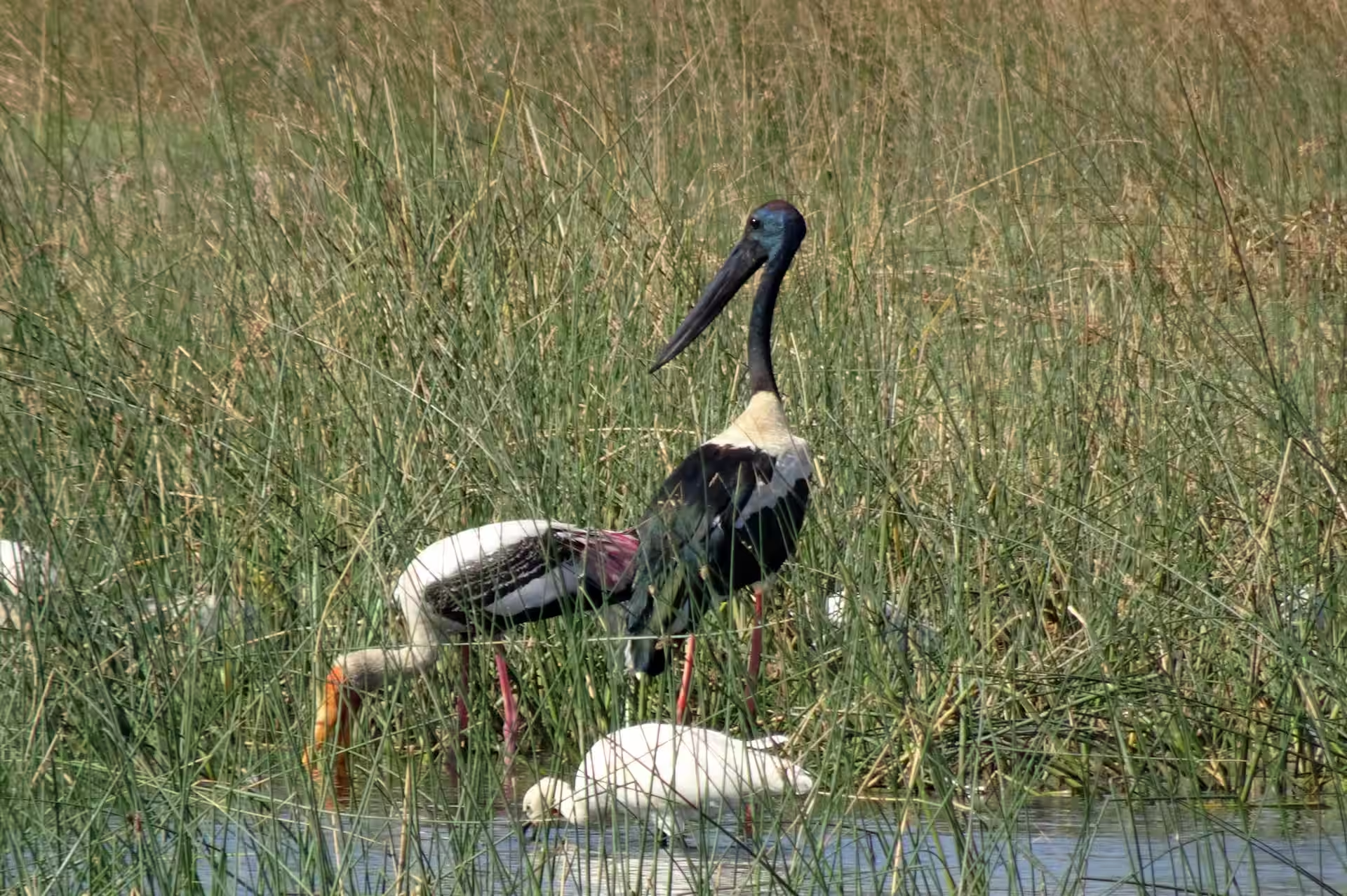
Black-necked Stork
Tall and striking.
Often seen walking slowly through shallow wetlands. Its black neck and white body make it stand out clearly against green marshes.
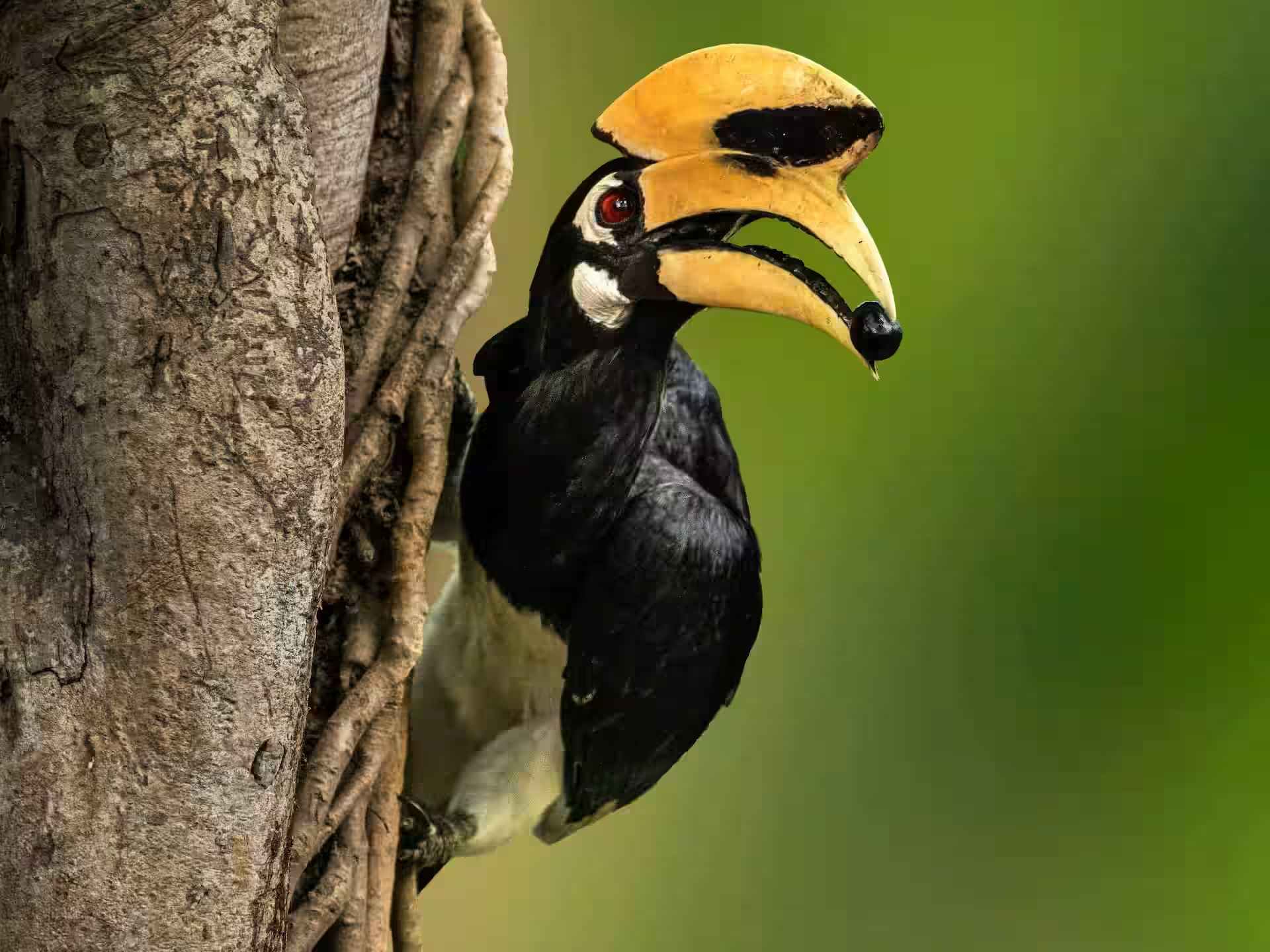
Oriental Pied Hornbill
Found in woodland patches within the park.
Unlike the grassland and wetland birds, this hornbill prefers forested areas. It moves between fruiting trees and is active during early hours.
Why Birding in Kaziranga Feels Different
Kaziranga’s annual floods shape its birdlife.
Floodwaters renew grasslands and wetlands, attracting migratory species and maintaining open feeding grounds. This constant renewal supports high bird density.
The mix of:
- River channels
- Marshes and beels
- Tall elephant grass
- Woodland patches
creates layered habitats within a single safari drive.
Best Time for Birdwatching in Kaziranga
- November to February: Peak winter migration season.
- Early mornings: Best activity across wetlands and grasslands.
- Post-flood reopening (late autumn): Fresh habitats attract birds quickly.
The park remains closed during peak monsoon months due to flooding, and bird movement shifts toward higher ground during that period.
Final Thoughts
Kaziranga is not only about rhinos and elephants.
It is one of India’s most important floodplain bird habitats. From rare grassland species like the Bengal florican to massive storks and pelicans, the park offers strong diversity in a single landscape.
If you slow your safari pace and scan wetlands carefully, Kaziranga rewards you with far more than large mammals.
Plan your Kaziranga safari with us for a deeper, wildlife-focused experience.